Metal-Free Fillings · Mercury-Free Dentist · Venice Island · Biomimetic Bonding
Metal-Free Fillings in Venice, FL.
Not a filling. A structural restoration.
A conventional filling plugs a hole. A biomimetic restoration rebuilds the tooth — adhesively bonded to the remaining structure, matched to your natural dentition, engineered to flex and load exactly as the original enamel did. No mercury. No BPA. No wedge effect. Minimally invasive, maximally conservative, and invisible under natural light.
The takeaway
Preserve more of the tooth. Replace only what has been lost.
Composite, ceramic inlay, or ceramic onlay — the restoration is chosen according to how much healthy tooth structure remains, not simply the size of the cavity.
Conserve
Keep more of your natural tooth.
Restore
Strong, beautiful and long-lasting.
Healthier choice
Metal-free, BPA-free materials.
At a glance · metal-free, restoration types & BPA-free materials
0% · Metal. Ever.
No amalgam. No metal alloys. No dark fillings that expand against your enamel for decades. Permanently eliminated from this practice.
3 · Restoration Types
Direct composite, inlay and onlay. Same-day inlays and onlays are printed in-house on our SprintRay Midas in a ceramic-reinforced hybrid resin; lab-made E.max ceramic is used where the case calls for it. The right restoration chosen by anatomy, not convenience.
BPA · Free · Always
Clinical-grade composite free of bisphenol-A. Every material used at Smile Spot is chosen for biocompatibility, not cost efficiency.
The wedge effect
Different materials. Different movement.
Dental amalgam — the “silver” filling — is about 50% mercury by weight, and it expands and contracts at a different rate than natural tooth structure as temperature changes. Over years, that repeated movement can act like a wedge: stress at the filling margins, micro-fractures, and the potential for larger problems.
A bonded composite restoration moves with the tooth instead. Treating decay early with metal-free, bonded materials helps preserve your natural tooth and prevent a more complex — and costly — problem down the road.
-
Amalgam filling
Expands and contracts — can create stress.
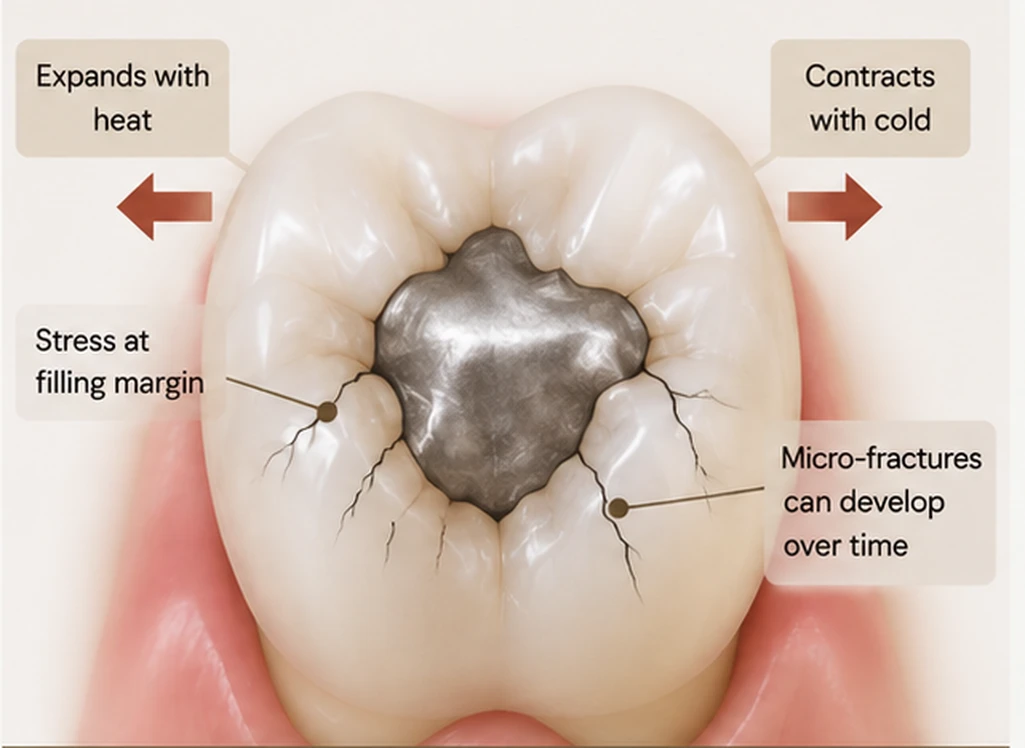
Expands with heat · contracts with cold · stress at the filling margin · micro-fractures can develop over time
Different movement. Higher stress.
-
Bonded composite filling
Moves with the tooth — acts as one structure.
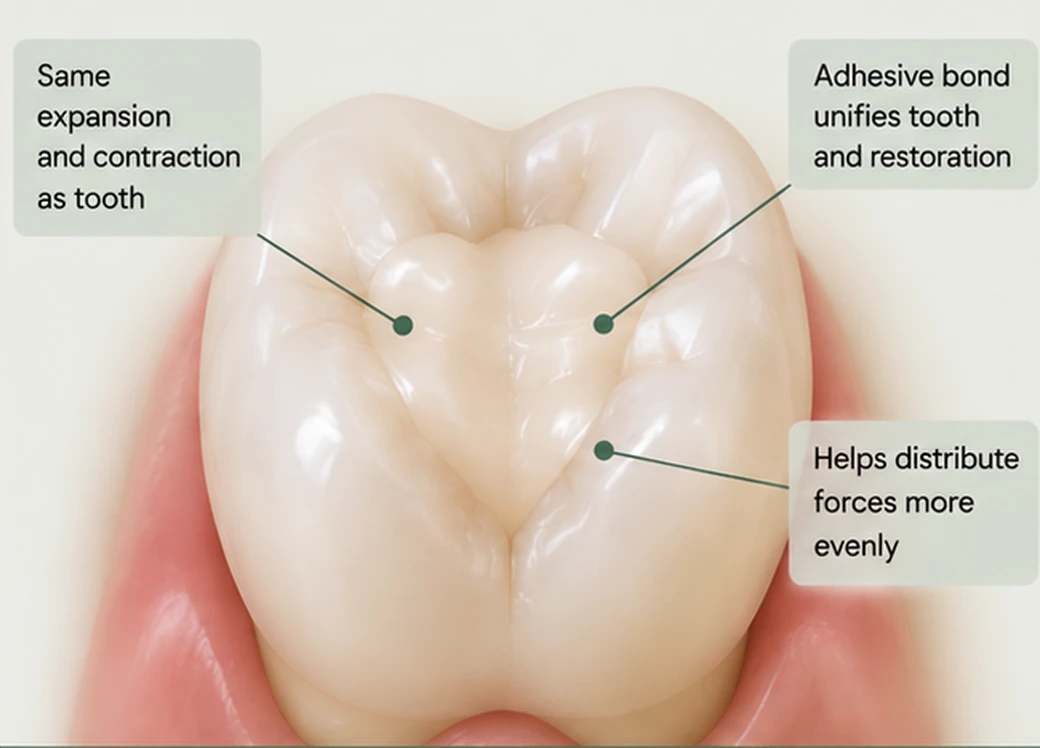
Similar expansion and contraction to tooth · adhesive bond unifies tooth and restoration · helps distribute forces more evenly
Same movement. Stronger together.
Why amalgam stresses teeth — thermal mismatch, retention & structural sacrifice
The Wedge Effect · Mercury-Free Dentist Venice, FL
“Silver” Fillings Don’t Restore Teeth. They Stress Them.
Dental amalgam is approximately 50% mercury by weight, bound with silver, tin, and copper. It has been the default cavity material for over 150 years — not because it is the best material available, but because it was the most convenient one for most of that period. Replacing old silver fillings is one of the most common reasons patients visit Smile Spot.
The clinical problem with amalgam is not its strength — it is its behavior. Metal expands when heated and contracts when cooled. Your teeth encounter this thermal cycle hundreds of times a day: coffee, cold water, ice cream, warm food. Over years, an amalgam filling expands and contracts at a different rate than the surrounding enamel — applying cyclic mechanical stress to the tooth walls every single time. The result is a network of micro-fractures radiating outward from the filling margins that are difficult to detect on an X-ray until they propagate into a cracked tooth requiring repair. We call this the Wedge Effect, and it is one of the most common causes of an apparently healthy tooth eventually needing a bio-mimetic crown. Mercury-free, tooth-colored composite fillings in Venice, FL are bonded to the tooth rather than wedged into it, which avoids this mechanism.
Book a Restoration Assessment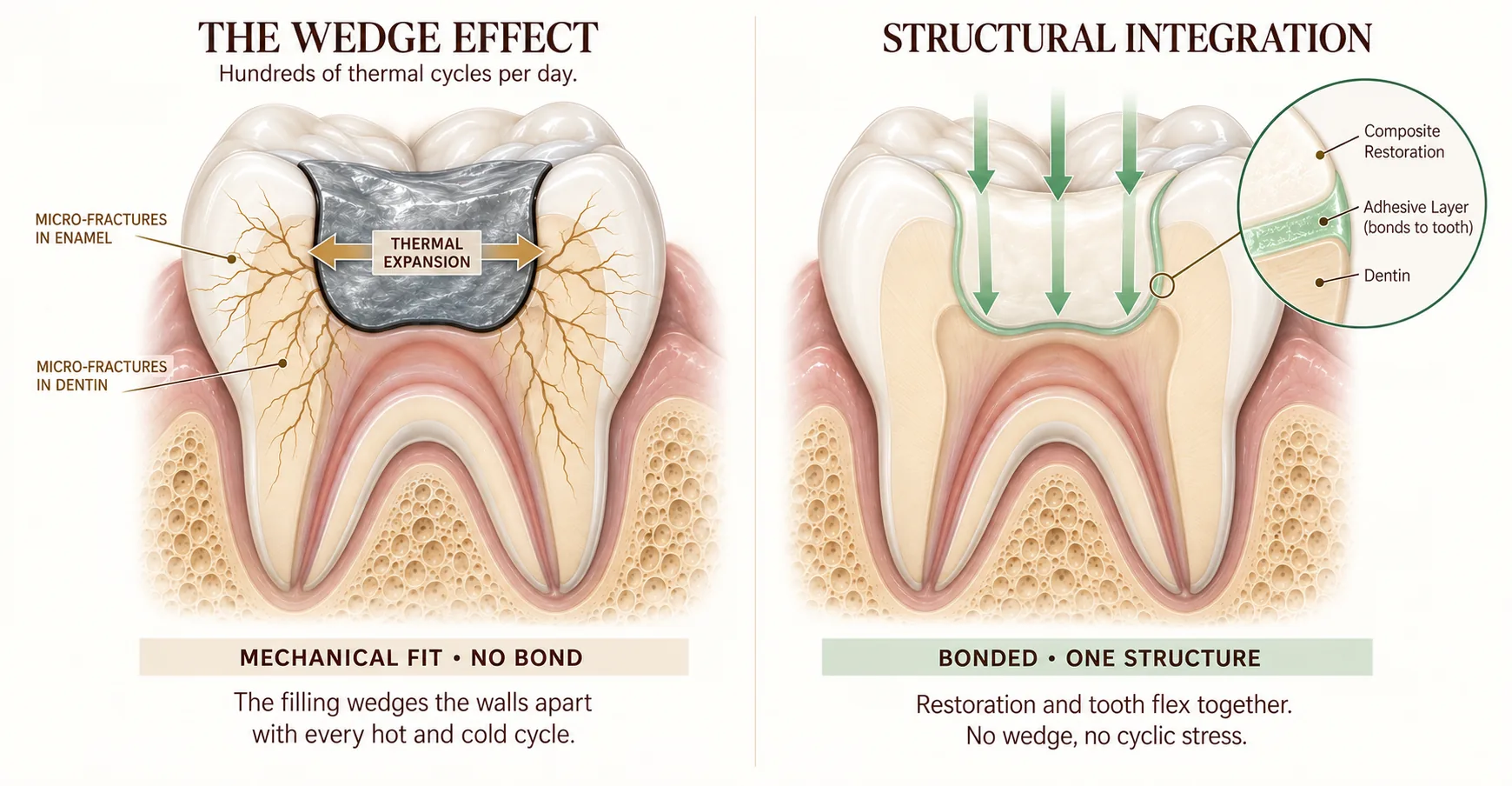
The Conservative Principle · The Right Restoration for the Right Tooth — Restoration hierarchy.
The right restoration for the right tooth.
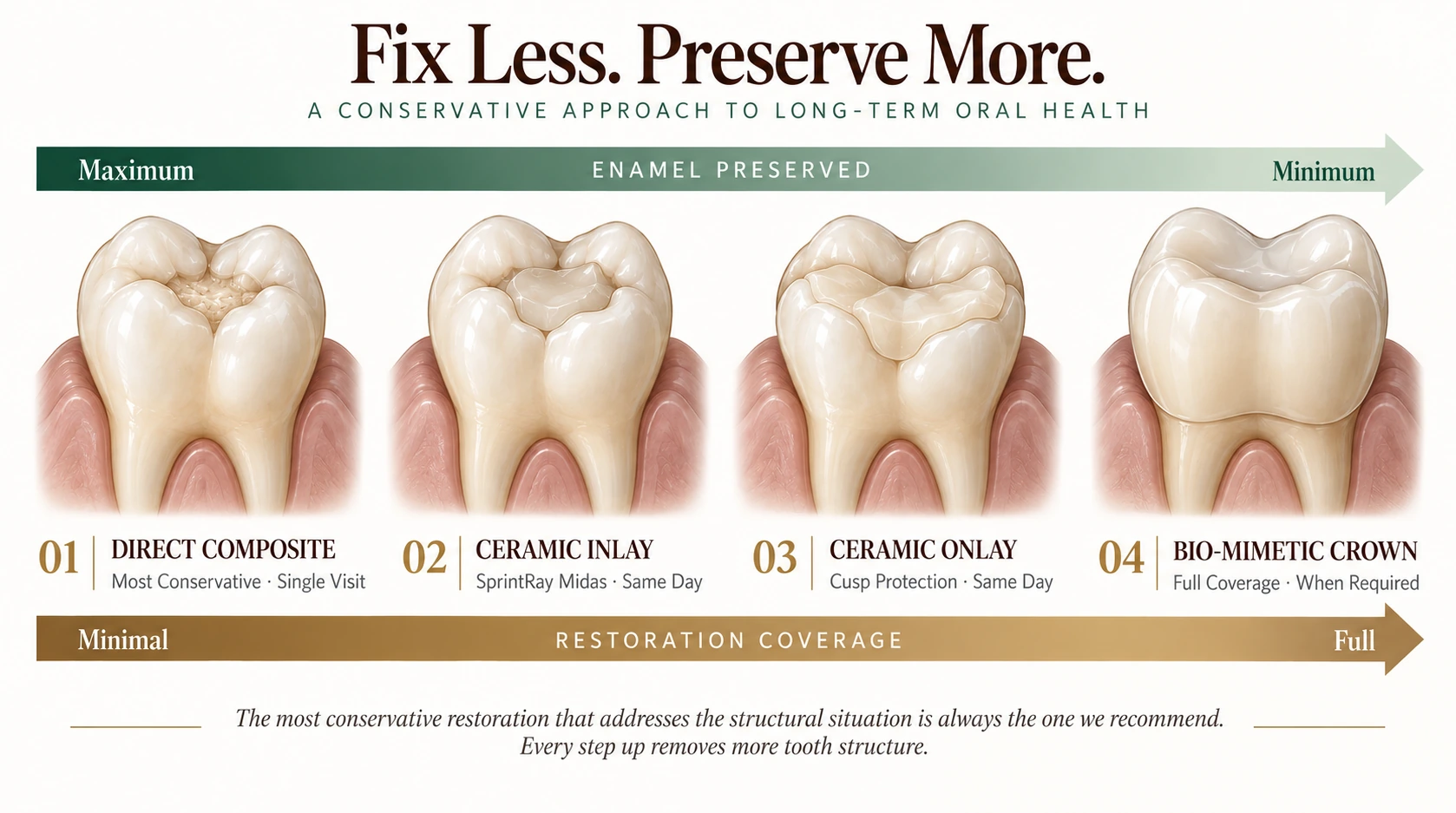
We always choose the most conservative option that can reliably restore function, protect the tooth, and last — minimally invasive dentistry, with maximum enamel preservation.
Less damage → more coverage
More restoration needed-
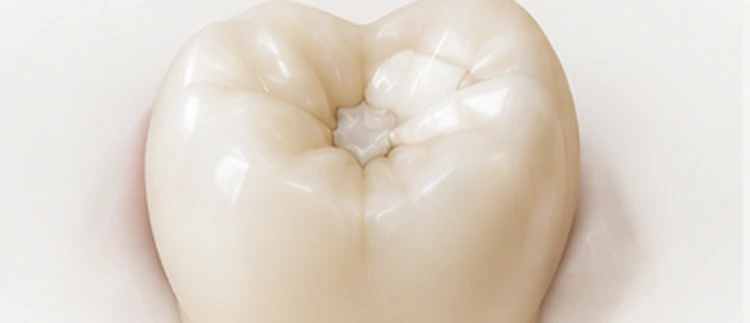
Direct composite
Small to moderate defects
Tooth-colored composite is bonded directly to the tooth, preserving maximum natural structure.
Most conservative
-
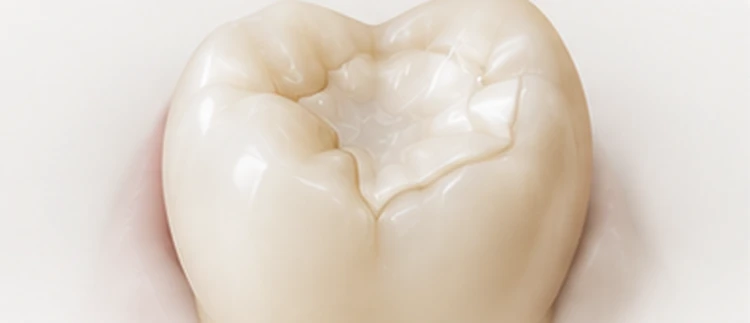
Ceramic inlay
Larger defects
A custom inlay is used when the cavity is too large for composite, but the cusps are still intact.
More strength
-
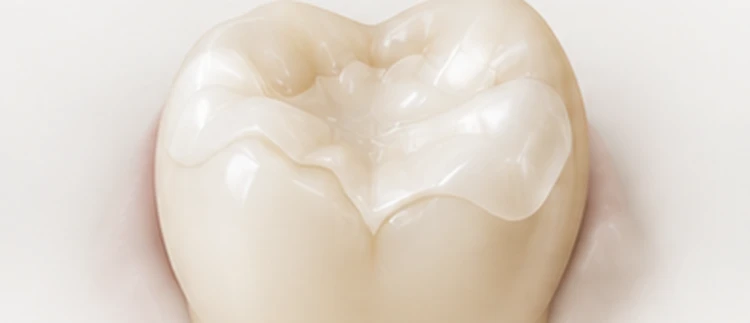
Ceramic onlay
Compromised cusp(s)
An onlay covers and protects weakened cusps, restoring strength while preserving healthy tooth structure.
Added protection
-
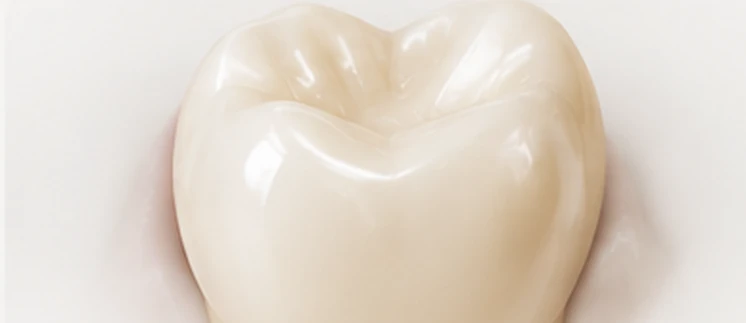
Biomimetic crown
Extensive damage
A full crown is recommended when the remaining tooth structure requires complete coverage for long-term stability.
Full coverage
Each step in the hierarchy — full clinical detail
The Conservative Principle
The Right Restoration for the Right Tooth.
There is a clinical hierarchy between a tooth-colored filling and a crown. The middle ground — ceramic inlays and onlays — is often skipped, and it is where much of the tooth can be saved. Minimally invasive dentistry means identifying the lowest point on this hierarchy that adequately addresses the structural situation — and staying there. Maximum enamel preservation. Minimum structural sacrifice.
Direct Composite Bonded Restoration
Placed and cured chairside in a single visit. BPA-free, mercury-free composite resin is applied in layers directly to the prepared tooth, adhesively bonded to conditioned enamel and dentin, and sculpted to match the original occlusal anatomy — the fissures, grooves, and cusp angles that tell the opposing tooth exactly where to land. Shade layers replicate the depth of natural dentin beneath translucent enamel. The result is a natural-looking, invisible restoration. White fillings in Venice, FL are shade-matched to blend with natural enamel in everyday light. The bond is structural, not just cosmetic.
Ceramic Inlay Indirect Restoration
When a cavity extends beyond what direct composite can reliably support, a ceramic inlay is the conservative answer before a full crown becomes necessary. At Smile Spot, inlays are designed via iTero digital scan and 3D printed in-house using our SprintRay Midas printer — a ceramic-reinforced hybrid resin restoration fabricated and delivered in a single appointment. No external lab, no second visit, no temporary restoration to manage. The surface is dense, stain-resistant and biomechanically compatible with natural enamel.
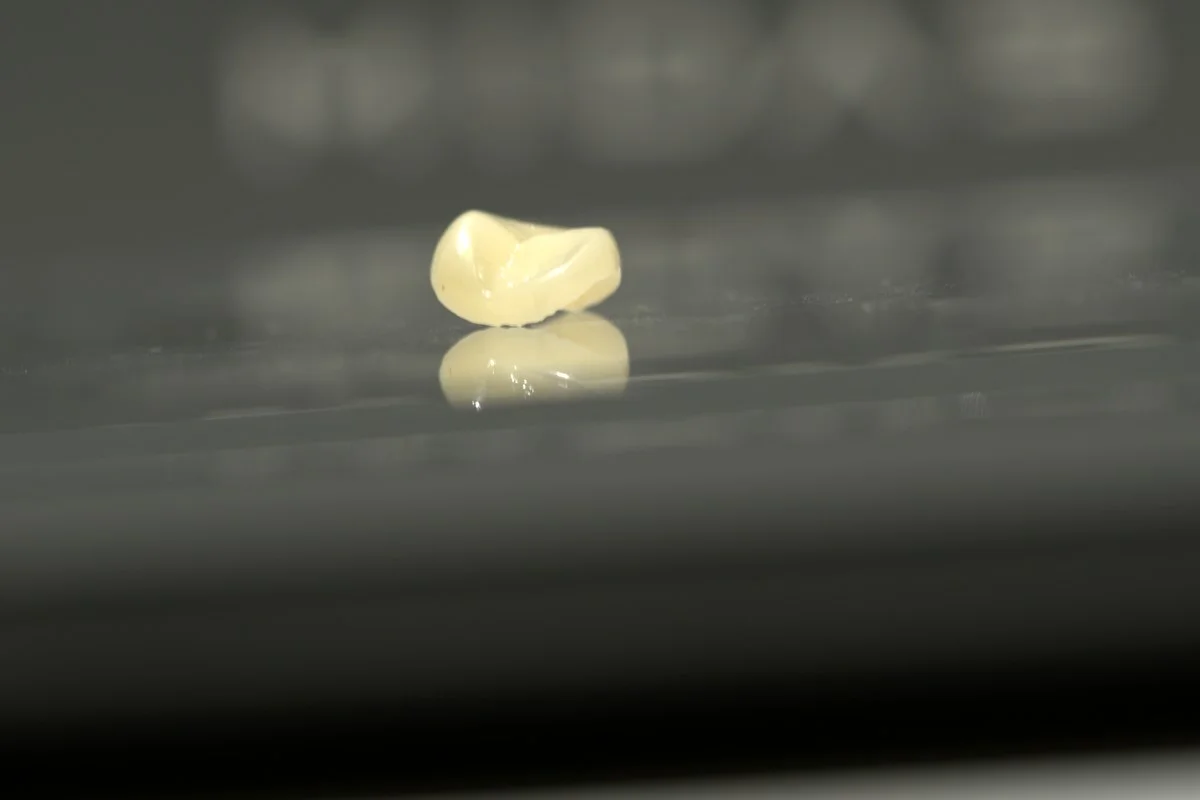
Ceramic Onlay Partial Coverage Restoration
An onlay extends over one or more cusps — providing cuspal reinforcement without encircling the entire tooth the way a crown does. It is precisely the clinical space between a filling and a crown, and it is where Kois structural analysis earns its place: determining whether remaining cusp structure can bear bite force independently, or requires ceramic coverage, is a diagnostic judgment that requires functional occlusal mapping — not a visual estimate. An onlay chosen at the right moment preserves natural tooth structure and enamel that a crown would have removed. Enamel preservation is the goal. The sequence matters.
Bio-Mimetic Crown Full Circumferential Coverage
A crown is prescribed at Smile Spot when and only when the structural case requires it — not because the cavity is large enough to make one defensible. The threshold is determined by measurement and Kois functional analysis, not estimation. If a tooth has reached the point where an inlay or onlay cannot adequately protect the remaining walls under functional load, a crown is the correct answer.
The conservative principle: Every step up this hierarchy removes more tooth structure and involves more irreversible preparation. Dr. Sellappan’s clinical mandate is to identify the lowest point on this hierarchy that adequately addresses the structural situation — and to stay there. A tooth correctly treated with a composite filling in Venice, FL today should not need a crown in three years because the correct answer was skipped for convenience. Patients seeking amalgam replacement in Venice, FL receive a bite-compatible, seamless restoration designed within their existing occlusal system — not a generic replacement dropped into an uncorrected bite. Patients whose situation involves extensive damage across multiple teeth may be candidates for comprehensive full mouth reconstruction rather than individual restorations.
Why Bonded Dentistry Is Different · What Changes When Metal Leaves the Room — A stronger, more conservative way to restore teeth.
Metal-free restorations do more than fill a space — they work with your natural tooth.
Adhesive bond
Bonds to enamel and dentin. Adhesion to the conditioned tooth creates a unified structure rather than relying on mechanical retention.
Conservative preparation
We remove only what is diseased and preserve as much healthy tooth structure as possible, rather than creating undercuts for retention.
Natural appearance
Tooth-colored ceramics and composites match the shade, translucency and texture of your natural teeth for a seamless, natural result.
Sealed margin
The adhesive bond creates a sealed interface, helping to keep bacteria out and reduce the risk of leakage and secondary decay at the margins.
Modern dentistry preserves more than just your smile.It preserves your natural tooth.
Amalgam vs our metal-free standard — the full comparison
Material Comparison
What Changes When Metal Leaves the Room.
The difference between amalgam and a biomimetically bonded restoration is not cosmetic. It is structural, adhesive, and biological — and it compounds over the lifetime of the tooth. Natural enamel appearance, stain-resistant surfaces, and margin integrity that resists secondary decay are the baseline standard — not premium upgrades.
| Traditional Amalgam (“Silver”) Filling | Smile Spot Metal-Free Standard | |
|---|---|---|
| Material | ~50% mercury by weightSilver, tin, copper alloy. Metal at the core. | BPA-free · Mercury-freeClinical-grade composite or pressed ceramic. Fully biocompatible. |
| Bond Mechanism | Mechanical retention only — cavity undercut to trap the filling. No adhesive interface with tooth structure. | Adhesive bondBonding resin penetrates conditioned dentin and polymerizes, forming a hybrid layer between restoration and tooth. |
| Preparation Required | Requires removal of healthy tooth structure to create retention undercuts — the preparation is determined by the material, not the decay. | Minimal preparationOnly diseased tissue removed. No healthy structure sacrificed for retention form. |
| Thermal Behavior | Expands and contracts at roughly 3× the rate of natural enamel — cyclic stress at the margins with every temperature change. | Matched to enamelThermal expansion closely mirrors natural tooth structure, avoiding the wedge effect. |
| Long-term Tooth Effect | Micro-fractures propagate outward from filling margins over years — a common, often undetected reason teeth eventually need crowns. | Supports remaining wallsThe adhesive bond reinforces residual tooth structure rather than stressing it. |
| Aesthetics | Dark metallic. Visible in the posterior. Greys surrounding tooth structure over time through ion leaching. | InvisibleShade-matched to surrounding dentition. Blends with natural enamel. |
| Marginal Seal | Physical fit only — the seam between amalgam and tooth is a bacterial pathway that widens as the metal cycles thermally. | Molecular sealAdhesive bond seals the margin at the microscopic level — a well-bonded margin is designed to resist secondary decay over time. |
We don’t place amalgam at Smile Spot Dentistry in Venice, FL. Every restoration here is metal-free. Every restoration placed in this practice is metal-free, BPA-free, mercury-free, and bonded adhesively to the tooth structure it replaces. Patients seeking biocompatible dental materials will find them here.
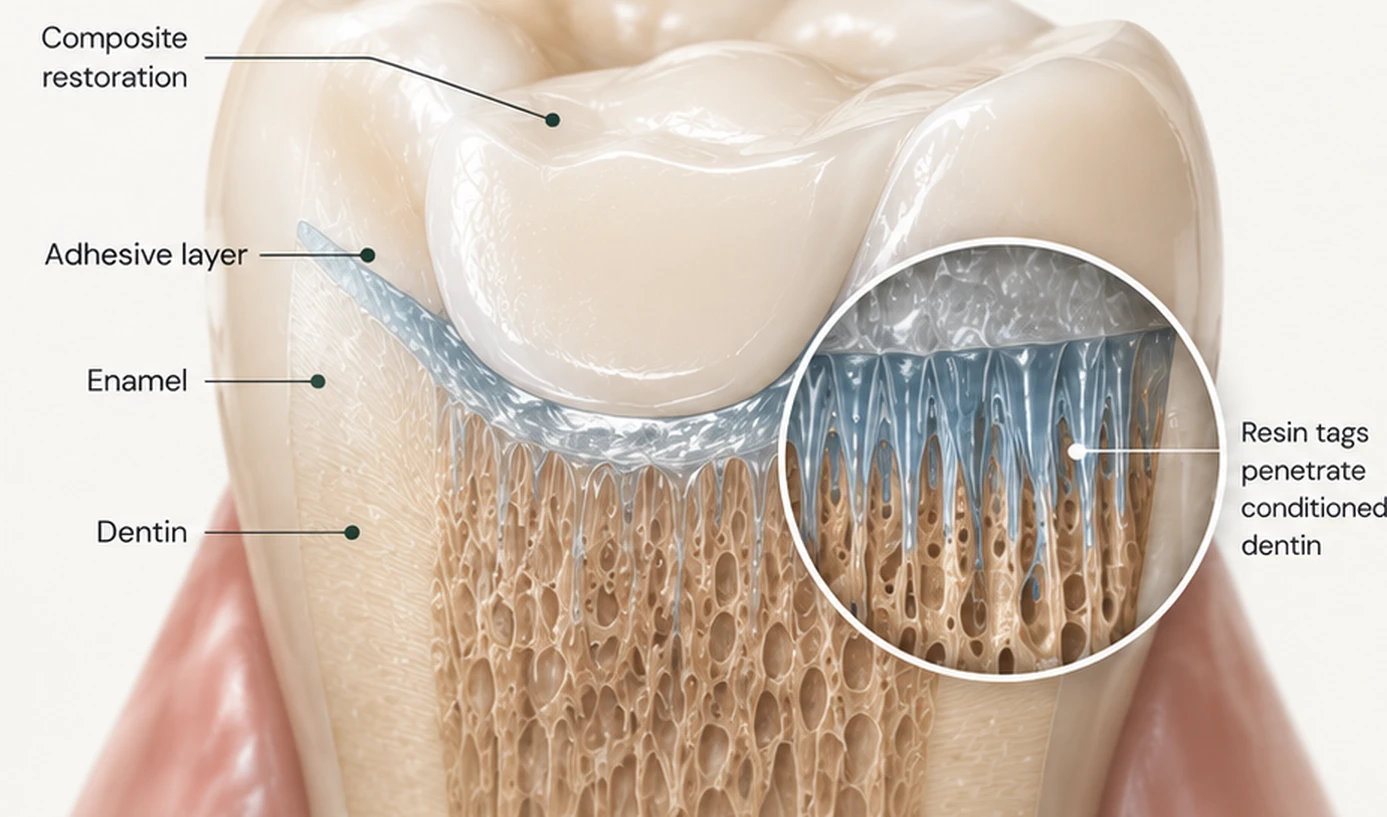
Adhesive Dentistry · The Adhesive Science — The restoration doesn’t simply sit in the tooth. It is bonded to it.
Using advanced adhesive systems, resin penetrates the microscopic structure of enamel and dentin, creating a strong, unified interface — the hybrid layer. This allows us to preserve more healthy tooth structure, seal the margins, and create a long-lasting, natural result.
Bonded interface
Connects to enamel and dentin.
Conservative preparation
Preserves more healthy tooth.
Bite verified
Shaped to work in harmony with your bite.
Advanced science.A more natural smile.
Preserve today. A healthier tomorrow.
Smile Spot DentistryVenice, Florida
The adhesive science & the art of invisibility — full detail
Adhesive Dentistry
The Chemistry of Structural Integration.
“A filling plugs a hole. An adhesive restoration rebuilds the tooth from the inside out — an adhesive dentin bond between ceramic or composite and the conditioned dentin that transmits load, flexes, and seals at the same rate as the structure it replaced. That is the difference between packing and bonding.”
The tooth surface is etched and primed before any restorative material is applied. This opens the dentinal tubules — microscopic channels running perpendicular to the tooth surface — and allows the bonding resin to flow into them. When the resin polymerizes, it forms a hybrid layer: part resin, part demineralized dentin, locked into the tooth wall. The restoration does not sit on the tooth. It becomes part of it.
Direct composite shrinks slightly as it cures — polymerization shrinkage. Applied in a single bulk increment, this shrinkage pulls the tooth walls inward, creating internal stress that propagates as sensitivity or marginal gaps. We apply composite in 2mm incremental layers, each cured independently. Each layer’s shrinkage is absorbed by the uncured composite above it, and cumulative stress on the tooth is kept low. The result is a filling that seats in close adaptation with minimal residual stress.
At the transition between tooth and restoration, the enamel is beveled under high magnification — a microscopic slope that allows composite to overlap the enamel surface at a feathered edge rather than a blunt seam. Light hitting this zone refracts gradually rather than abruptly — the optical signature of a seam becomes very hard to see. This is why a well-placed restoration can be difficult to spot even on close inspection. It is a preparation technique that requires both magnification and patience.
The final surface of a posterior composite is sculpted to recreate the original occlusal anatomy — the fissure pattern, cusp height, and contact geometry that the opposing teeth were designed to meet. A flat filling changes the bite. A correctly sculpted restoration restores it. Using articulating paper and Kois functional analysis, each restoration is checked in excursive movements before the patient leaves the chair.
Natural teeth are optically complex. The dentin at the core is warmer, more saturated, and more opaque. The enamel overlying it is cooler and more translucent — allowing light to pass through to the dentin beneath before returning to the eye. A single-shade composite has no internal depth. It returns light from one flat layer and reads as artificial in natural light.
Shade tabs are matched under multiple light sources — not just operatory lighting, which skews toward the blue spectrum. Natural daylight reveals metamerism: two materials that appear identical under one light source appear different under another. A restoration matched only under operatory light will read as a different shade in the patient’s kitchen, office, or outdoors.
The surface of a natural tooth is not smooth. It has perikymata — fine horizontal striations that scatter light at micro-scale and prevent the tooth from looking glazed or plastic. A composite polished to a high gloss returns light uniformly — the optical signature of a material, not a tooth. After shaping, composite restorations are finished with progressively finer instruments to replicate the micro-texture of surrounding enamel.
For ceramic inlays and onlays in Venice FL, shade and characterization are handled at the ceramist level with Dr. Sellappan’s direction. Pressed ceramic can be stained, glazed, and characterized to match surrounding enamel translucency in ways that exceed what composite layering alone can achieve.
The Art of Invisibility — A restoration shouldn’t look restored.
We match color, light and texture so your filling blends with your natural tooth.
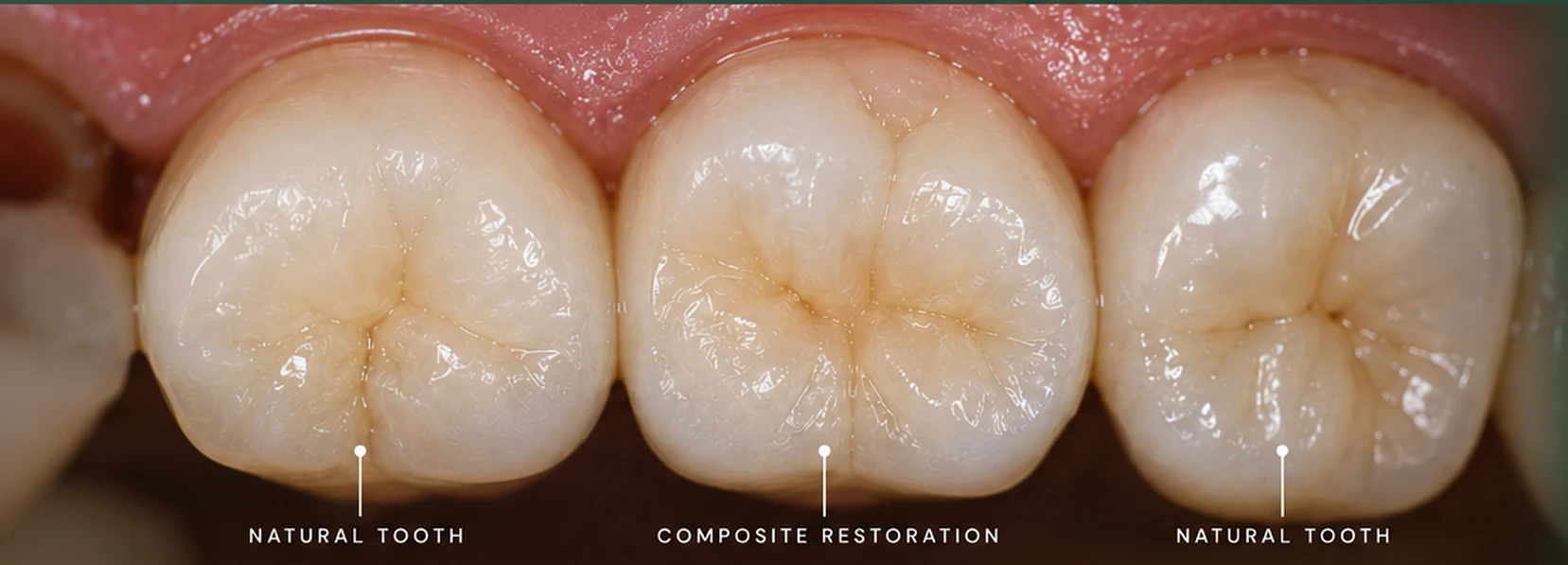
Can you spot the filling?
That’s the point.
Modern composite and ceramic restorations can be very difficult to distinguish from natural tooth structure when color, translucency and surface texture are carefully matched.
Color
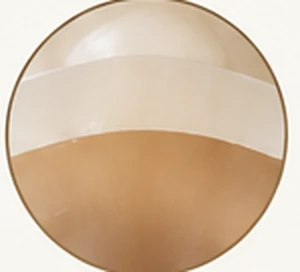
Not one shade.
Natural teeth have different color, opacity and depth in the enamel and dentin. We layer composite or ceramic to match these natural variations — not just one flat color.
Light
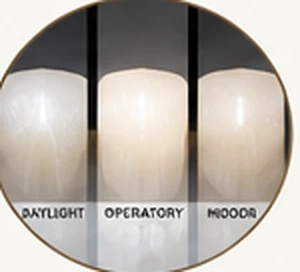
A match in more than one room.
Shade is evaluated under different lighting conditions, including natural daylight and operatory lighting. Two materials can match under one light and differ under another — metamerism — so the restoration is checked in more than one environment.
Translucency
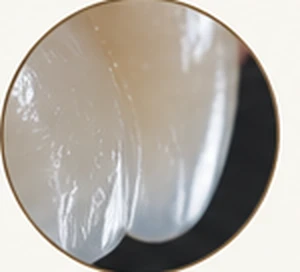
Natural teeth transmit light.
Enamel isn’t opaque. It allows light to pass through, creating depth and vitality. Our materials are selected and layered to reproduce this natural optical behavior.
Texture
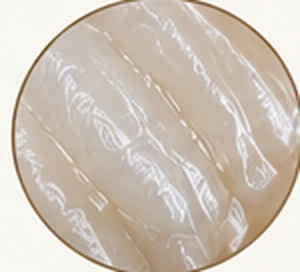
The surface matters.
Finishing and polishing recreate the subtle anatomy and light reflection of natural enamel — including the fine horizontal perikymata striations — so the restoration blends with the surrounding tooth structure.
Advanced science.A more natural smile.
It’s not just a filling. It’s a difference you can’t see.
Smile Spot DentistryVenice, Florida
Insurance & Investment · Fillings Are Basic Coverage, Inlays and Onlays Are Major — Understand the cost before treatment begins.
We work with most major PPO insurance plans, verify your benefits, and review your estimated coverage before treatment begins. For patients without insurance, we offer flexible financing and membership options to make care more accessible.
Insurance support
- We work with most major PPO plans
- We verify your benefits
- We review your estimated coverage before treatment
Typical coverage
Coverage varies by plan.
| Composite fillings | Often covered — basic restorative |
|---|---|
| Inlays / onlays | Often covered — major restorative |
| Crowns | Often covered — major restorative |
Flexible options
- Third-party financing — CareCredit and Cherry
- In-house membership options
- Transparent estimates
- No pressure — just information
Have questions?
We’re here to help.
Our team will walk you through your benefits, explain your options, and help you choose the best path for your care.
Typical PPO coverage by restoration type & accepted plans
Insurance & Investment
Fillings Are Basic Coverage. Inlays and Onlays Are Major.
Most PPO plans classify direct composite fillings as a basic service (typically 80% coverage) and ceramic inlays and onlays as major restorative work (typically 50% after deductible). We verify your specific benefits before treatment begins — so you know your expected out-of-pocket cost before treatment begins at Smile Spot Dentistry in Venice, FL.
No insurance? 0% interest financing and in-house membership plans are available. No one should defer the right restoration because the cost is unclear.
Verify My Benefits →Coverage percentages are typical ranges. Your specific benefits are verified before any treatment is scheduled.
Advanced science.A more natural smile.
Invest in a healthier, more confident you.
Smile Spot DentistryVenice, Florida
Frequently Asked Questions — Straightforward answers. A more confident you.
Here are answers to the questions we hear most about metal-free fillings in Venice, FL. Still curious? We’re happy to help.
Treatment & outcomes
A properly placed, biomimetically bonded composite filling typically lasts 10–15 years or longer. Longevity depends on three factors: the quality of the adhesive bond (determined by technique and moisture control), incremental layering to eliminate polymerization shrinkage stress, and occlusal accuracy — the restoration must not be left high in the bite. All three are standard protocol at Smile Spot Dentistry in Venice, FL.
For the small to moderate cavities composites are indicated for, yes — a bonded composite restores the tooth’s ability to handle normal bite forces, and because it is adhesively bonded it supports the remaining walls rather than wedging them apart. Amalgam is a strong material in bulk, but it is held by mechanical undercuts and moves at a different rate than enamel. Where a cavity is too large for composite to hold its shape under load, we recommend a ceramic inlay or onlay rather than stretching a filling beyond what it can do.
That is the goal, and it is why shade is selected under more than one light source. We match dentin opacity and enamel translucency in layers rather than using a single flat shade, then finish the surface so it reflects light like the teeth around it. Most posterior composites are very difficult to pick out once polished.
Not necessarily — and not all at once. Amalgam fillings that are intact, without marginal breakdown or associated tooth fractures, do not require immediate replacement. The decision to replace an amalgam filling is made based on clinical findings: visible cracking at the margins, secondary decay detected beneath the filling, or tooth fractures traced to thermal cycling. Dr. Sellappan assesses each filling individually and recommends amalgam replacement only when the clinical evidence supports it.
Yes. All composite materials used at Smile Spot Dentistry in Venice, FL are clinical-grade and BPA-free. Bisphenol-A is a byproduct of certain composite formulations — our materials are specifically selected to be free of it. Every restoration placed at this practice is metal-free, BPA-free, and bonded adhesively to the tooth structure it replaces.
The Wedge Effect refers to the cyclic mechanical stress that amalgam fillings apply to surrounding tooth walls over time. Metal expands when heated and contracts when cooled — at nearly three times the rate of natural enamel. Every temperature cycle widens the gap between filling and tooth, producing micro-fractures radiating outward from the filling margins. This is a leading undetected cause of apparently healthy teeth eventually requiring crowns. Biomimetically bonded composite and ceramic restorations eliminate the Wedge Effect because they expand and contract at the same rate as natural enamel.
The experience
Most patients are comfortable throughout. The area is fully numbed before treatment begins, and because bonded restorations require less drilling than amalgam preparations, there is usually less tooth to remove. Mild sensitivity to cold for a few days afterwards is normal and settles; tell us if it persists, as the bite may simply need adjusting.
A single direct composite filling is typically 45 to 60 minutes from numbing to final polish. A same-day inlay or onlay takes longer, usually two to three hours, because the tooth is scanned, the restoration is produced in-house and then bonded at the same visit. You will be given a time estimate when treatment is scheduled.
A bonded composite is fully cured before you leave, so you can eat as soon as the numbness wears off — waiting avoids biting your cheek or tongue. For the first day or two, favour softer foods on that side and avoid very hard or sticky items while you get used to the new surface.
A direct composite filling is placed and cured chairside in a single appointment. A ceramic inlay is digitally designed via iTero scan, 3D printed in-house using our SprintRay Midas printer — then bonded at the same appointment. Because Smile Spot fabricates inlays in-house, both a composite and a ceramic inlay can be completed in a single visit with no external lab involved. An inlay is indicated when the cavity is too large for direct composite to maintain shape under bite force — typically when it extends into or between the cusps. The precision of a 3D printed inlay exceeds what is achievable with chairside composite alone, making it the appropriate choice when structural demands require it.
Yes. Most PPO dental insurance plans cover tooth-colored composite fillings as a basic restorative service — typically at 80% after your deductible. Ceramic inlays and onlays are classified as major restorative work and typically covered at 50%. We verify your specific benefits before any treatment is scheduled. You will never receive a surprise fee at Smile Spot Dentistry.
Ready to restore your smile?
Let’s take the next step.
Whether you need a new filling or want to replace old metal restorations, we’re here to help you smile with confidence.
What your restoration assessment covers
Schedule your restoration assessment at Smile Spot Dentistry — Venice Island’s mercury-free, biomimetic dental studio at 273 S Tamiami Trail. Dr. Sellappan will evaluate every existing restoration individually and recommend exactly what each tooth requires — composite, inlay, onlay, or crown — with the clinical reasoning explained before you decide. Cosmetic fillings, amalgam replacement, cracked tooth repair, ceramic inlays Venice FL — all handled in-house, same day. CareCredit, HSA, and FSA accepted. Benefits are verified before treatment begins.
- Conservative care
- Metal-free materials
- A healthier tomorrow